
Staples, CLC addressing meat processing demands
News | Published on February 24, 2026 at 4:09pm GMT+0000 | Author: Tucker Henderson
0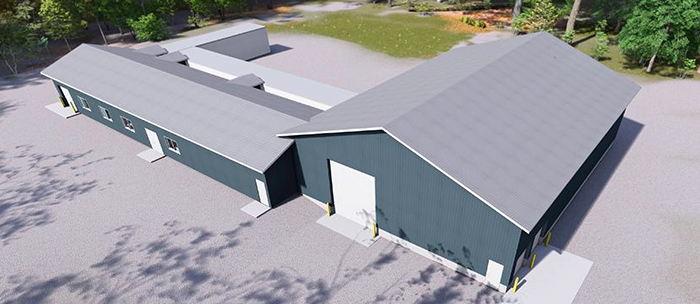
An engineering illustration of the new Farmers Union Processing + Meats location in the Staples Industrial Park.
By Robert Williams
Editor
Farmers Union Processing + Meats, a state-of-the-art, USDA-compliant meat processing facility for primarily beef and pork is nearing opening in the Staples industrial park. Groundbreaking occurred last June with expectations to be fully operational coming in the early months of 2026.
The 8,000-square-foot facility will process approximately 15 beef cattle or 30 hogs per day and employ up to 15 people when fully operational.
The facility is partnering with Central Lakes College and Ridgewater College to provide training and internship opportunities for students studying meat processing and butchery. A related modular meat processing facility at the Central Lakes College campus in Staples held its grand opening in November 2024.
The Department of Agriculture’s Rural Development made two awards that helped fund this new facility: a $604,000 grant through the Meat and Poultry Processing Expansion Program and a $1,500,000 Rural Economic Development Loan.
With the help of additional funding from other agencies, Minnesota Farmers Union (MFU) purchased the mobile meat processing unit for CLC and Ridgewater College to operate through their Meat Cutting and Butchery program.
“This project beautifully illustrates the power of grassroots membership driving action at the state and national level,” said MFU President Gary Wertish. “MFU members raised the issue of a lack of meat processing infrastructure in 2019 and COVID-19 elevated the issue. MFU members called for more investment in meat processing at the state and federal level. Lawmakers responded and both levels of government made investments in this vital part of local processing infrastructure. MFU is proud to work with partners from across the political spectrum at all levels of government in addition to private sector supporters to bring Farmers Union Processing + Meats to fruition.”
This enhancement to the Central Lakes College butchery education program was made possible through the support of the Minnesota Farmers Union Foundation, which facilitated funding through an Economic Development Administration (EDA) grant.
“MFU looks forward to working with livestock farmers in the Staples area to provide a USDA-compliant meat processing facility, which will open new market opportunities to them,” Wertish said. “In addition, we are proud to work with Central Lakes and Ridgewater colleges to train the next generation of meat processors and local locker plant owners. We hope this facility serves as a catalyst for rural economic development in the region.”
Hy-Tec Construction of Brainerd is the lead contractor on the $8 million project and Widseth is the project architect.
The project highlights addressing Minnesota’s meat processing bottleneck problem. According to the University of Minnesota’s Institute for Sustainable Agriculture’s report, small and medium-sized livestock growers in Minnesota are facing limited meat processing access due to plant closures and fully booked processing appointments, along with difficulties hiring and retaining skilled employees.
Recommendations include: the creation of an apprenticeship program for meat processing workers, increased transition resources from trade associations, further support for plants processing/selling locally raised meats, and the creation of a “navigator” position at the Minnesota Department of Agriculture to provide guidance to processors. Financial resources should also be made available to navigator organizations providing guidance to immigrant apprentices.
For more information on MFU and both college programs visit: mfu.org/
MFU also has an extensive report online, the MFU Bottleneck Project, at bottleneckproject.weebly.com
Significant funding for this report was provided by the University of Minnesota Extension Regional Sustainable Development Partnerships, and significant support was provided by the Minnesota Department of Agriculture, Minnesota Farmers Union, and the School Sisters of Notre Dame.