

NYM School Board weighs building project
News | Published on April 14, 2026 at 3:15pm GMT+0000 | Author: Kendall Koenen
0NYM to host open house set on April 20
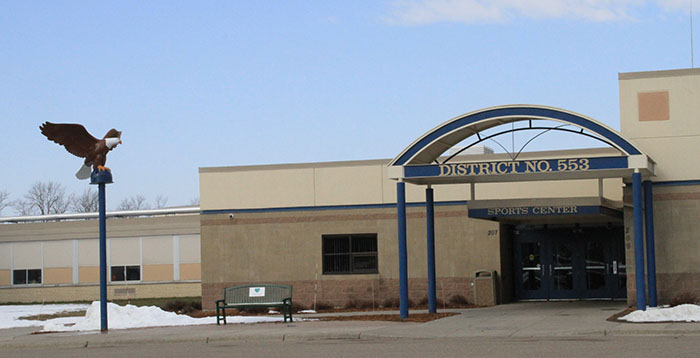
The New York Mills School District will be hosting a community meeting on Monday night for a potential school building referendum that the school board is discussing for a levy vote this year. The board is weighing three levy questions with first question costing approximately $22 million.
By Tucker Henderson
Reporter
A Community Open House has been set for Monday, April 20 at the New York Mills School to serve two main purposes: to provide the public with information on an upcoming potential building referendum and to hear from district residents to hear their feedback on the potential project.
The open house will take place in the commons from 5-7 p.m. and will have several stations to learn all about the project details, tax impact, district needs, as well as a presentation on the process and tours of the facility and the needed improvement areas.
“We started this process last spring,” said Superintendent Adam Johnson. “We had some community listening sessions and we did the survey this past fall to really isolate what we were working on. Some of it is issues with the building as well.”
The potential upcoming building referendum would not only update and upgrade much needed building and grounds maintenance, it would also expand the school’s footprint in order to alleviate the lack of space necessary to carry out regular school operations. An expansion of the building would create space for classes and extracurricular activities, storage, daily operations, and building repairs.
“Starting at the high school end, we’re looking at expanding our woods and metals lab,” said Johnson. “We’re trying to butt out that wall and make it a bigger space for woods, metals, and small engines, they have some ventilation issues that are going to come up in the next couple years.
“One of the biggest things going on, we’re hopefully going to build a band and choir room in the back,” he continued. “Right now our choir is in the elementary, so our high school kids have to walk all the way down there to get to choir, so we’re going to try to centralize it. Then upgrading our science labs, they haven’t been updated since 1992 when the school was built, we have some countertops and things like that which are getting old.
“What that would open up for us then is the current art room would go into the current band room and the art room would become a new science lab,” he said. “Right now we have three science teachers, but only two labs so we would have three full science labs to be able to do what we need.”
Another important update planned for the building is the installation of secure entry points for all three main entrances to the school. This would reroute all incoming traffic through the elementary, high school and district offices in order to check in with each visitor as they enter the building. Currently, a door bell system is used to allow visitors in during the school day, but the secure entry would provide more information and help keep track of everyone in the district throughout the week.
Other issues including non-ADA compliant bathrooms in the 2-4 hallway, updates to both the auditorium and sports center for their respective sound systems and other basic maintenance, and a planned combination of special education resources and classrooms in the current choir room area are all on the docket.
“We don’t have a loading dock,” said Johnson, “So there’s no way for a semi-truck to come into our school. The plan is to take the maintenance office and make that into an extended kitchen prep area and then put a loading dock on the back side of the school and relocate maintenance back there. To do that, we’re looking at putting a drive around there, that way people can back right into this receiving storage and out. It makes loading and unloading a semi-truck a bit easier and it increases storage space for us too, which is one of our biggest things.”
Along with the loading dock and expansion of the school to include a band and choir area, which includes practice rooms and instrument storage, will also add two additional wrestling rooms and storage for other extracurricular activities which are currently at a minimum.
“With wrestling growing, especially girls wrestling, we want to bring in two new wrestling rooms,” he said. “One would fit two full mats and we would have an additional one where we could fit at least one full mat. Right now, if we need more practice space, they have to go into the commons or behind the curtains at the same time as basketball practice. By doing this, we should add that space needed for practice because they will have their own dedicated wrestling spots.”
The weight room is another room which will be expanded as when physical education classes are held using the room, there are often students overflowing into the hallway as there is simply not enough room to hold everyone. This expansion will allow for a full fitness lab which will be used for classes as well as an idea being tossed around for community-use outside of school hours.
The school district’s main goals are to expand in order to have enough space for their students’ current needs as well as to repair issues across the entire campus. Johnson said that when the school started this process they had those two main goals in mind and the details of the expansion and maintenance came from community listening sessions with students, teachers and community members from a wide variety of backgrounds.
“This is the stuff that we need,” said Johnson. “These are things that popped up in the listening sessions and facility needs assessment like exterior door replacement and elementary windows—we still have some old wooden windows in our elementary—renovating the elementary bathrooms, fixing some drainage issues, sealcoating our parking lot. Things that just cost money and it’s hard to do it with our current budget. We have a full list—we have storage issues, we have parking lot issues—different things like that. There’s a lot of things in there, but this will make the flow of the building better and things we need.”
Information at the open house will be all-encompassing for each aspect of the potential referendum and everyone is invited to come to learn more about the project and share their feedback about their thoughts and concerns. The planned referendum will have three questions of which the above will encompass Question 1, which has an approximate cost of $22 million.
While the district feels that the project behind Question 1 is necessary at this stage to continue to grow and operate efficiently and effectively, Question 2 and Question 3 are additional updates which have been specifically mentioned and sought out by community members, but that the district does not feel are absolutely essential to implement at this time.
Question 2 offers an update to the high school media center which will change the space into a commons area for the students. This project along with the other two are still being sought to have the lowest cost to taxpayers. Currently Question 2 would cost an additional $2 million.
Question 3 is another suggestion from the community of a new track which, because of several challenges with the current football field, would likely need to be shuffled around and implemented with a new football complex on the school’s campus. Space becomes a problem at the current football field when it comes to implementing a new track and the thought would be to implement this project next to the school building. This project is slated to cost $5.5 million.
“We really feel like we need these things (in Question 1),” said Johnson, “But what is the appetite for that? Do you want this? That’s what the open house is for, we will have all of these questions there so people can look at them. We want true feedback. None of these decisions are final, so what we’re looking for at the Open House is community input.
“We’re really looking for input from the community before we go further,” he continued. “This is all leading to a potential November referendum. We want to be as transparent as we can with what we’re doing on this project. Some local referendums are being voted on now, but I told the board I don’t like that. November is a general election and people will be voting, we’re not trying to get something through that people don’t know what’s going on.
“We’re trying to be as transparent as we can up front and show people what’s really happening with it,” he continued. “We really want feedback on this—if we need to make changes, we can do that to be ready for the fall. If somebody can’t make it, they can always reach out to me.”
Tax impact is always a deciding factor on school referendums and Johnson commented that this is no different and he and the school board understand how a raise in taxes can affect families and individuals’ budgets throughout the year. That is why the school board has been doing everything in its power to reduce any tax burden on district residents and focusing on the essential needs of the district first.
Along with a tailored-fit project cost, the State of Minnesota’s Ag-To-School credit funds will be funding nearly a quarter of this project. This program helps save farmers and agriculturalists from paying dearly in taxes each year as their acreage is separated by an acre of land and their home from their farm and agricultural land, which is not impacted by the tax increase.
“That’s a big piece of it,” said Johnson. “It’s not a true hit on the agriculture land, if we didn’t have this credit, it would be impacting farmers too much. twenty-four percent is coming from this credit, 10 percent is coming from farm land, 10 percent is commercial and industrial and 11 percent is recreational tax. Most of it is coming from residential properties.”
One thing to note about this potential tax referendum is that it will be the first voter-approved referendum since 2000 when the auditorium was built. There have been some smaller projects such as the parking lot that were paid for by tax funding, but nothing on this large a scale or which needed a vote from the public for 26 years.
“It’s just one of those things that need to be done,” said Johnson. “It’s been 25 plus years and we have some things that need to be updated. Our board has been trying everything to minimize the tax impact, they’ve been really focused on that.
“Our kids have different needs than they used to, they’re taking more space for things,” he continued. “We have 24 plus kids out for fishing league, we have 55 plus kids in baseball and softball, track and field, the speech teams keeps growing, it’s great that students are involved in a lot of things. We’re growing, we’re expanding, our kids are taking up more space, which is great, we’re just running out of space to do everything.”