

Lawmaker webinar informs local residents
News | Published on May 12, 2026 at 6:36pm GMT+0000 | Author: Kendall Koenen
0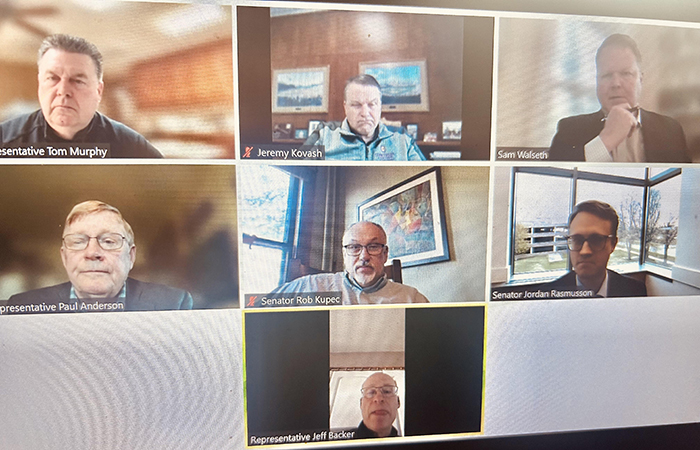
Speaking via webinar Friday, May 1, were Otter Tail County state legislators Tom Murphy, upper left, Jordan Rasmusson, middle right, and Jeff Backer, lower center.
By Tom Hintgen
Otter Tail County Correspondent
County residents, on Friday morning, May 1, had the opportunity to access a legislative update right from the comfort of their own homes from 7 to 8 a.m. This was the result of a webinar sponsored by West Central Initiative (WCI) and Lakes Country Service Cooperative.
Among those participating as part of the webinar were three state lawmakers who have constituents in Otter Tail County.
State Sen. Jordan Rasmusson is leading efforts to reduce housing regulations in order to increase affordability of starter homes in Otter Tail County and across the state of Minnesota. He is emphasizing the need to reduce minimum lot sizes and ease zoning rules and other regulations.
State Rep. Tom Murphy raised the issue of affordability in Otter Tail County and specifically cited high vehicle license tab fees. He emphasizes that these fees are “an excessive burden on taxpayers.” He said it is important to small business owners and the many challenges they face in west central Minnesota.
State Rep. Jeff Backer said his constituents in Otter Tail County are concerned about the state’s new paid leave program. This allows workers to take up to 20 weeks off each year for medical and family issues, paid for by employers and employees which Backer says is a burden. He proposes employers being allowed to opt in or opt out.
Other lawmakers who took part in the webinar included Rep. Paul Anderson who represents the Morris-Benson area and Sen. Bob Kupec who represents Clay and Becker counties which includes Moorhead and Detroit Lakes.
Webinar moderators were Jeremy Kovash of Fergus Falls-based Lakes Country Service Cooperative and Sam Walseth who heads a lobbying company in St. Paul. Other issues raised by state legislators during the May 1 webinar included:
• Public education and too many state mandates
• Rural hospital funding challenges
• Property tax relief, among them those who have seasonal recreational properties such as at lake cabins
• Fraud at the state level
• Farm challenges with high fuel prices and high fertilizer costs